Seeing the grief of the other
Interview with Rabbi Sharon Brous, Judisk Krönika, Feb. 2024. Originally in Swedish, translated to English by me.
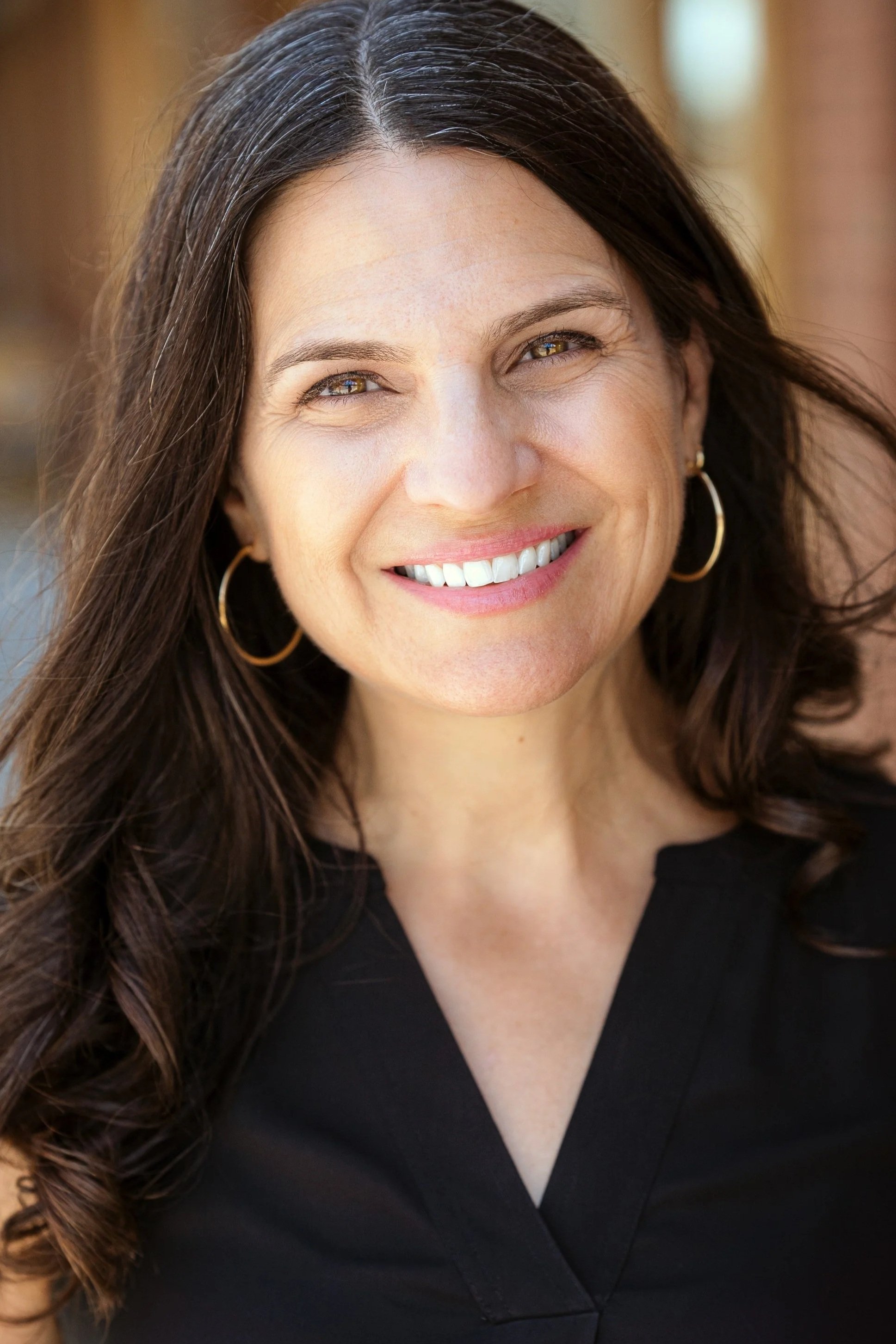
Sharon Brous’ perceptive and deeply human voice stands out in the media cacophony after Hamas attacks in Israel on October 7, 2023 and the Israeli destruction of Gaza. Brous is a rabbi who leads the independent congregation IKAR in Los Angeles.
She manages to articulate the deep grief that many Jews feel, while also reminding us that Palestinians are currently living through an enormous trauma and a humanitarian disaster of unfathomable proportions.
– An American Jew’s sense of existential loneliness need not negate the reality of a Palestinian-American’s existential loneliness. It can actually position us to understand one another more deeply, she says.
Brous is the author of The Amen Effect, out in January 2024. The central thesis of her book is that witnessing and affirming the grief of another, reaching out to someone who is struggling, is the only – and most important – thing one can do. The title refers to the “amen” with which a congregation responds to a mourner reciting the Kaddish.
Brous maintains that grief ritual is one of the things that the Jewish tradition does best and that such rituals can help us understand this post-October 7 moment.
– When you are in your deepest mourning, after burying a loved one, you sit shiva. You have seven days in the house of mourning, the most intense period of grief. You are cared for and fed by people who love you. You don’t leave your house. But you can’t stay there forever. So when the seven days are over, you walk around the block. You see that life still goes on out there. That your neighbor is late for work, that someone else is also grieving, while another person is happy.
A central paradigm of the book is a Mishna dealing with an ancient Jewish pilgrimage to the Temple Mount. Those who are doing ok enter the sacred space turning in one direction, while the broken-hearted walk in the opposite direction. When they meet, the non-mourners are required to ask “what happened to you?”
Brous says that her vantage point on grief has shifted over the eighteen months since she finished writing the book. She says that she belonged to the category of non-mourners when she wrote it.
– I was pastoring my community. I worked a lot with grief, but I had never lost anyone in my immediate family. My father died right before Rosh Hashana, so I am both literally and figuratively walking in the opposite direction now, as a mourner for this year.
Then October 7 happened and there was a shift in perspective for many Jews. Certainly in Israel but also in the Diaspora.
– For American Jews I think many went from feeling relatively well, to feeling that they were in need of empathy and comfort.
Brous admits that she was a bit nervous rereading the manuscript when she recently recorded the audiobook. Still she feels she wouldn’t change much.
– The book holds up, it is built around an ancient idea that is actually multi-dimensional. It is written by rabbis in the second century, who had experienced grief from both sides and thus prescribed a ritual that works, regardless of which direction you are traveling in.
She emphasizes the importance of finding a way out of the sense of powerlessness, finding a new role, a new way of handling the grief many feel in the face of the war in Israel and Gaza.
– Part of what I want to say in the book is that in our grief we must find a way of engaging with other mourners. No group or individual has a monopoly on grief.
And also, when living through acute trauma and danger it is very hard to open your heart in empathy. A sense of safety is a precondition for empathy.
– For us, who live here, at a distance from Gaza, from the kibbutzim and the border communities. Can we allow that distance to give us the space to open our hearts to one another with wonder? Not to convince one another of anything, but because we have a shared humanity.
Ezra Klein did a series of interviews on the war with affected people from a variety of backgrounds and with many different ideologies on his podcast The Ezra Klein Show (Brous among them). In one of the first episodes a guest says: “I have never felt so completely tribal. I don’t like it. It frightens me.”
In her book Brous speaks of tribalism. Are there any positives to it?
– Standing in relation to other people is a fundamental human need. We are social beings. And we are naturally inclined to other people who look like us, talk like us, pray like us, vote like us; Who live in this world similarly to us, even if that means a shared sense of being outsiders. Belonging to a group can help us build a sense of self and wellbeing.
That sense of belonging is incredibly important to us humans. But it can also lead to indifference, or even hostility toward those outside the group.
– That is very dangerous. Obviously this dynamic is much older than October 7. But I think many people were confronted with their sense of Jewish belonging in a new way in that moment. “This happened to my family, why can’t the world see what happened to my family.”
Brous says this is part of the anguish many Jews have felt over the past months, amplified by the reactions of the surrounding world.
– The denial that rapes happened, the justification of violence, posters of hostages being torn down in the days immediately after. I think this affected people and made them feel that perhaps they weren’t part of whatever larger community they previously imagined as their tribe. Which lead many to seek comfort in a sense of belonging to the Jewish tribe.
Brous says more people regularly attend her services than ever before, that many are searching for that sense of community.
– And the danger of that entrenchment in our tribe is that it doesn’t help us understand those outside our tribe. It has the opposite effect.
Brous has a long record of working for coexistence with other faith leaders from various communities.
– Bridge-building is absolutely essential to creating the kind of human community that I want to live in. Creating a just society is ultimately the goal.
Sharon Brous has spent decades working for peace, coexistence and justice. She has also spoken in interviews about a sense of disappointment and alienation from some of her previous collaborators on these issues after October 7.
– The first days were painful. The silence. Not hearing from people who should have been in touch to say that violence against civilians is never ok.
Have there been any developments in regard to that?
– There was a lot of silence. And then there was some celebration. And that was just shocking for many of us who were in this space, because there was such a lack of moral clarity around what is ok and what is not ok. And to even see some heinous acts and atrocities being justified in the name of liberation was incredibly painful. But there were people who reached out.
As time passed, Brous realized that some of the people who had not been in touch had themselves been struck by tragedy; some had family in Gaza who had been killed, others had lived through private traumas, completely unrelated to that war. Then there were old friends who spoke out in ways that she felt were antisemitic and who were not interested in private dialogue with her when she got in touch.
On October 14, in the first sermon Brous delivered after October 7, she spoke of how many people had come out to support the Israeli civilians who were affected.
– The president of the United States is condemning these atrocities, the most powerful person in the world. My congress person called me four times that first week to see how my community was doing. She’s not Jewish. We’re not actually alone. There are friends and allies. But sometimes the absence can feel louder than the presence.
Brous reminds us that this idea of seeing the other, to bear witness to another person’s grief, is a duty that we as Jews have toward those Palestinians who are mourning their dead, injured and displaced family members in Gaza.
– Our anguish, grief and trauma must awaken us to those same feelings in the people on the other side of that border. Several days after October 7 I reached out to a Palestinian friend and colleague. He had lost two family members that day in Gaza. If I can understand and honor the humanity of every person, can I not then also understand and honor the humanity of every Palestinian child who is dying in this terrible war?